


Why Are People Saying SEO Is Dead? But are Getting More Important For Business's
Every year, like clockwork, a new article circulates across the internet with a provocative headline claiming that Search Engine Optimization is obsolete. With the rapid rise of artificial intelligence, AI Overviews, and conversational chatbots, these claims have never been louder. But is SEO dead?
The short answer is absolutely not. However, the traditional playbook—stuffing keywords into thin content and chasing arbitrary backlinks—is entirely extinct.
When beginners ask, what is SEO, they often picture the old days of gaming the system to rank a blue link on page one. Today, to understand what is SEO, you have to look at it as a sophisticated, user-first discipline focused on entity building, AI search optimization, and providing undeniable value.
If you own a website, adapting to this new landscape is no longer optional; it is critical for survival. Here is why SEO is not dead, how it has evolved for 2026, and why it is becoming more important than ever for website owners.
What is SEO Today? The Evolution from Blue Links to Answers

To grasp why SEO remains a cornerstone of digital marketing, we have to redefine the term. What is SEO in the modern digital ecosystem?
Historically, Search Engine Optimization was the process of optimizing web pages to appear higher in traditional Search Engine Results Pages (SERPs). You matched your content to specific search queries, earned backlinks, and hoped for a click.
Today, SEO is the practice of structuring information so that search engines, AI answer engines, and large language models (LLMs) can discover, understand, verify, and cite your brand as an authoritative source. It is no longer just about generating traffic; it is about establishing digital visibility and credibility across a highly fragmented web.
The Rise of Generative Engine Optimization (GEO)
We have entered the era of Generative Engine Optimization (GEO) and Answer Engine Optimization (AEO). Users are increasingly turning to tools like Google’s AI Overviews, Microsoft Copilot, and ChatGPT for direct answers rather than a list of websites to browse.
Instead of typing short phrases like "best portfolio design," users are submitting conversational, highly specific prompts: "What are the essential elements of a professional portfolio website for an educator?"
If your content is structured clearly, factually accurate, and rich in original insights, these AI models will synthesize your content and cite you directly in their responses. This is why SEO is evolving rather than dying.
Why the "SEO is Dead" Myth Persists
If SEO is so crucial, why do people keep writing its obituary? The confusion stems from a few massive shifts in how search engines operate:
- The Dominance of Zero-Click Searches: Over half of all searches now end without a user clicking a link. Because Google and Bing are surfacing direct answers, calculators, and AI summaries right at the top of the SERP, users get what they need instantly. If your only metric for SEO success is raw click-through traffic, the landscape looks grim.
- The Shift Away from Keyword Stuffing: Search algorithms have become incredibly adept at natural language processing. They understand semantics and user intent. Outdated tactics that used to work a decade ago will now actively penalize your site.
- Search is Fragmenting: People are not just using Google. They are searching for product reviews on YouTube, seeking authentic experiences on Reddit, and looking for visual inspiration on TikTok and Instagram.
Because the old way of doing SEO is dead, many mistakenly assume the entire discipline is gone.
Why SEO is Becoming More Important for Website Owners
For website owners, ignoring search optimization in this AI-driven era means rendering your brand invisible. Here is why investing in modern SEO strategies is more vital than ever.
1. AI Models Need Authoritative Sources
Generative AI does not create facts; it synthesizes them from the web. If you want your business to be mentioned when a potential customer asks an AI assistant for recommendations, your content needs to be optimized for extraction. This means using clear headings, bulleted lists, structured data (schema markup), and unambiguous language. By optimizing your site, you are effectively feeding the AI the exact information you want it to output about your brand.
2. Trust and E-E-A-T are the Ultimate Currency
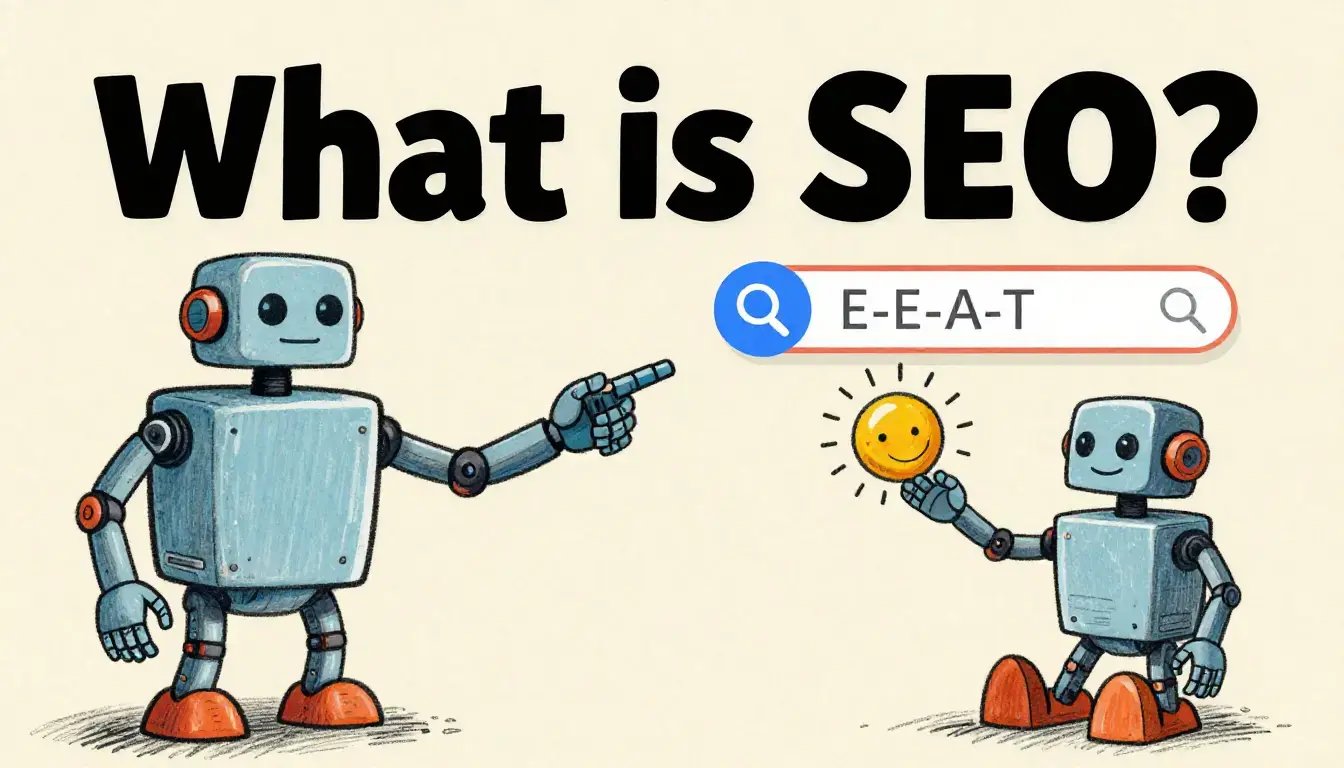
Google and Bing Webmaster Guidelines heavily emphasize E-E-A-T: Experience, Expertise, Authoritativeness, and Trustworthiness. With generative AI drastically lowering the barrier to producing generic content, the web is flooding with automated, low-quality articles.
In response, search engines are elevating content that demonstrates genuine human experience. If your website showcases original research, real-world case studies, author biographies, and expert perspectives, SEO is how you signal that high value to search algorithms. You are no longer competing on word count; you are competing on trust.
3. Entities Over Keywords
Search engines no longer look at a page as a collection of words; they view it as a network of Entities (people, places, concepts, and things). When you optimize your website today, you are building an entity graph. You are clearly defining who you are, what you offer, and how it relates to your industry. This disambiguation is critical. If search engines clearly understand your business entity, they will confidently serve your website for highly relevant, high-intent queries.
4. Technical SEO is the Foundation of User Experience
Both Google Search Console and Bing Webmaster guidelines make it clear: user experience is a ranking gate. Technical SEO ensures that your website is fast, secure, and mobile-friendly.
- Core Web Vitals: Metrics like Largest Contentful Paint (LCP) and Interaction to Next Paint (INP) measure exactly how it feels for a human to interact with your site.
- Crawlability: If search engine bots cannot efficiently crawl your site structure or read your XML sitemaps, your content will never be indexed.Technical SEO ensures that no digital roadblocks prevent users—or AI crawlers—from accessing your value.
Aligning with Google Search Console & Bing Webmaster Guidelines
To successfully execute an SEO strategy today, you must align with the rules set by the search engines themselves. Both Google and Bing have updated their guidelines to prioritize "helpful, people-first content." Here is how to apply those guidelines practically:
Focus on Search Intent, Not Just Volume
When selecting target keywords, look beyond simple search volume. Focus on low-KD (Keyword Difficulty), high-intent topics. For example, instead of trying to rank for the highly competitive term "web design," target a long-tail, conversational query like "how to optimize a single-page portfolio for AI search 2026."
By answering the specific, nuanced questions your audience is asking, you satisfy user intent. Search engines reward pages that comprehensively solve the user's problem without requiring them to hit the "back" button.
Utilize Structured Data (Schema)
Schema markup is a form of microdata that helps search engines parse and understand your content. Whether you are publishing an FAQ, a recipe, a product review, or an event, wrapping that information in proper structured data allows search engines to display Rich Snippets in the SERPs. In an environment where screen space is highly competitive, Rich Snippets drastically improve your visibility.
Monitor Performance Diligently
Google Search Console is no longer just a diagnostic tool; it is a strategic asset. Website owners must regularly check the Page Indexing Report to resolve 404 errors, crawl anomalies, and unindexed pages. Monitoring your Performance Report allows you to see exactly which queries are driving impressions and where your click-through rates (CTR) can be improved by refining your title tags and meta descriptions.
Actionable Steps to Future-Proof Your Website's SEO
If you are a website owner looking to stay ahead of the curve, here is your blueprint for modern search optimization:
- Audit Your Content for Extractability: Review your most important pages. Are they giant walls of text? Break them up. Use descriptive
##and###subheadings. Add summary bullet points at the top of long articles. Make it effortless for both human scanners and AI models to extract the core facts. - Publish Original Insights: Do not publish content that simply regurgitates what is already on the first page of Google. Add a unique point of view, proprietary data, or a personal anecdote that an AI could never replicate.
- Optimize for "Search Everywhere": Recognize that your audience might be searching for you on YouTube or social platforms. Embed relevant multimedia content into your website. Use descriptive alt-text for images and transcripts for videos to capture visual and audio search traffic.
- Keep Content Fresh: AI models prioritize recent, accurate information. Regularly audit your existing content. Update statistics, refresh outdated advice, and add a "Last Updated" timestamp to signal freshness to search engines.
- Nail the Technical Basics: Ensure your site architecture is logical. Use clear, descriptive URLs. Fix broken internal links and ensure your site loads instantly on a mobile connection.
The Verdict: SEO Has Evolved, Not Expired
So, the next time someone asks you what is SEO, you can confidently tell them that it is the critical infrastructure of digital visibility. It is no longer a dark art of tricking algorithms; it is the science of delivering exceptional, structured, and authoritative value to both users and intelligent machines.
SEO is not dead. The simplistic, low-effort tactics of the past are dead. But for website owners willing to adapt, focus on user intent, and build genuine authority, SEO remains the most powerful, sustainable engine for long-term digital growth.